Oral histories are stories that living individuals tell about their past, or about the past of other people. Preserving oral history is a critical first phase of genealogical research and data preservation.
Lyman D. Platt, Ph.D.
In the previous posts, information about family history has been shared including an interview with my father. in this post, I will dig deeper into the meaning of oral history and family history. Since there is a lack of written sources on the family history, many sources are connected to oral history then what is different between oral history and written history as displayed in the posts about family history and historical background? The quotes on top of this post and a previous post might give people a perspective of how important oral history is.
Is oral history a reliable source?
It’s important to understand what oral history is when many think about oral history they think about it as a story. In this incident like many other situations, my father has been told information from his father and grandfather. The question many people would ask is, is this information true and how can we trust oral history? East Midlands Oral History Archive´s article What is oral history? mentions that: ” Oral history can be defined as the recording, preservation and interpretation of historical information, based on the personal experiences and opinion of the speaker.”(Perks, n.d) The oral history is history based on the speaker’s personal opinion of the information the speaker has. further, the article mentions that: ” All historical sources have their problems, and oral history is not necessarily any more biased or partial than documentary evidence (perks, n.d). Even though oral history is a source that is not written down, there is still a chance that it is true. if you think about written history, yes it can be backed up by other written sources, but they might have it wrong as well.
Paul Thomson´s The Voices of the Past mentions that: “Oral history certainly can be a means for transforming both the content and purpose of history. It can be used to change history itself. It can break down barriers between teachers and students, between generations.”(Thompson, 2018) He explains here that oral history serves as a greater purpose than just stories. If Oral history can be recognised as a real reliable source it can change history because you get new sources added to a subject and can see history from a different perspective. that brings me to family history. Thompson mentions generations which is a central part of this site.
oral history in family history, a connection?
This site uses family history as a base to back up some historical facts presented by family members. Oral history can contribute family history, Cynthia Brown, Mary Stewart and Michell Winslow, oral historians explain that:”(Oral history) brings out new stories from family members about relatives alive and dead – enabling you to record the memories, experience and opinions of your relatives while they re still alive, including capturing family stories passed down the generations.” (Brown, Stweart, Winslow, 2012). The oral history gives a family an opportunity to keep their family history alive even though it is not written. Even though it’s not a written source one can believe that since family history is important to people, there is a possibility the alterations or changes in the stories are small. people want to keep the family history the same unless something shameful happened.
is oral history connected to a place or items ?
Brown, Stewart and Winslow further mention that: “(oral history) provide wider context about the places where your ancestors lived, the work they did, or local and national events during their lifetimes(…).” (Brown, Stweart, Windlow, 2012) My father lives on the ground where our family settled down for generations. The oral history has therefore been kept in the same area for centuries. It is clear that my father knows a lot from being told for example from his grandfather about his grandfather’s father.
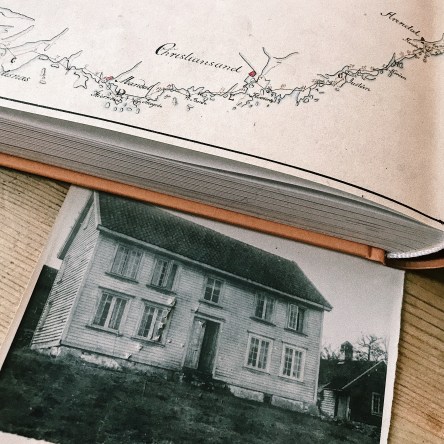
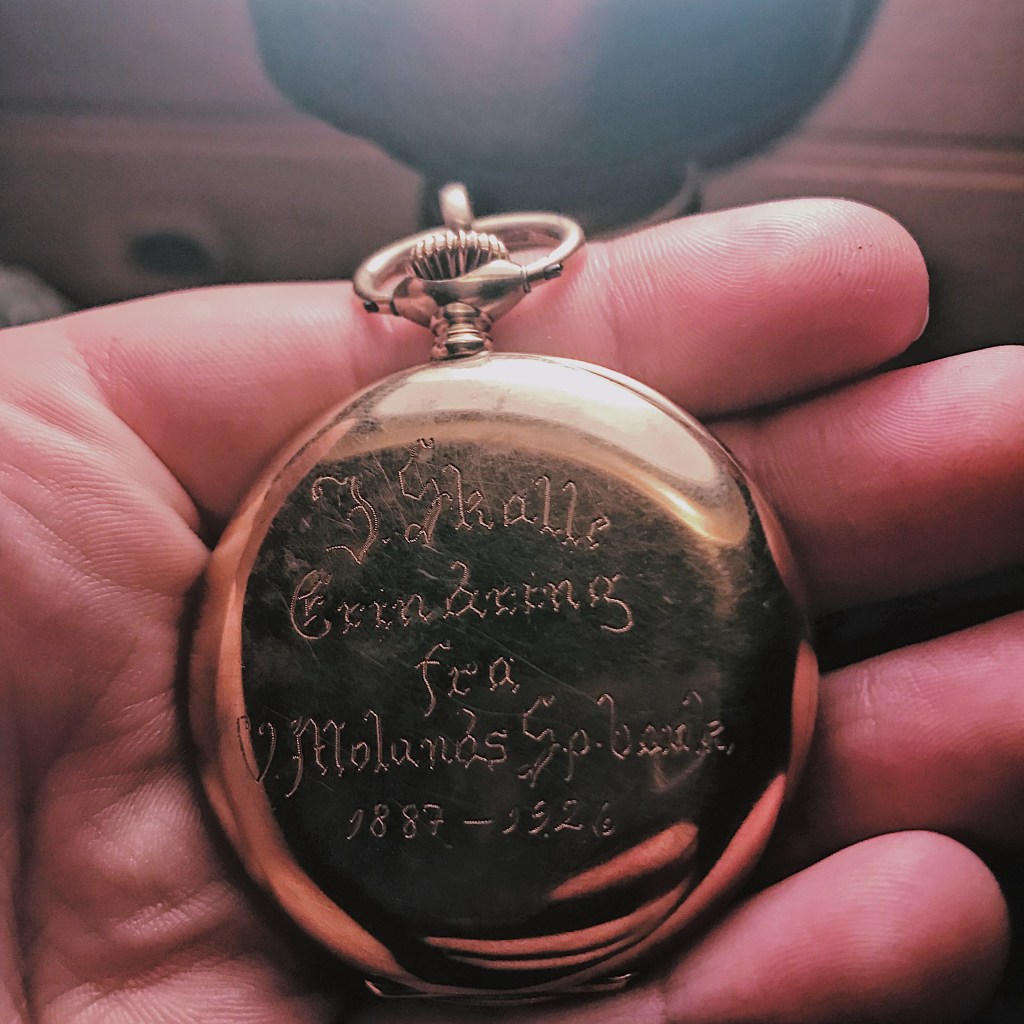
Janis Wilton wrote in Imaging Family Memories that: “Also of relevance are discussions of the ways in which a photograph can trigger or even shape a memory shared through an oral history interview.” (Wilton, 2018). In the case of this site, one can look at photographs as a thing, just like a pocket watch or a document. It awoke memories, in my father’s case the watch awoke oral memories that have been passed down to him from his grandfather and father.
This provides the information that provides the understanding and evidence for the importance of oral history. Oral history provides a person, a family and at times a whole people with the history they have so longed for. In my father’s case, it gives him the knowledge of his family when there is a lack of written history, in his belief the oral history is just as reliable as written history. Oral memories serve in many cases as one of the only sources for information for families about their previous generations. This is the case for many Norwegian families and that is why this project emphasises the lack of written family history because there is a great lack of it if you do not count written sources.
_____________________________________________________________________________
bibliography:
Brown, C., Stewart, M. and Winslow, M. (2012). Family Historians | Oral History Society. [online] Ohs.org.uk. Available at: http://www.ohs.org.uk/information-for/family-historians/ [Accessed 8 Jan. 2019].
Lyman D. P. (n.d.). The Importance of Oral Histories – Using and conducting an oral history. [online] Genealogy.com. Available at: https://www.genealogy.com/articles/research/2_oralhs.html [Accessed 9 Jan. 2019].
Perks, R. (n.d.). What is oral history?. [online] Le.ac.uk. Available at: https://www.le.ac.uk/emoha/training/no1.pdf [Accessed 8 Jan. 2019].
Thompson, P. (2018). The Oral History Reader. 3rd Edition. Robert Perks and Alistair Thomson. The Voices Of The Past – Oral History, 45(1), p.34.
Wilton, J. (2018). The Oral History Reader. 3rd Edition. Robert Perks and Alistair Thomson. The Voices Of The Past – Oral History, 45(1), p.269.
 A Father's Memory