Is Oral History Reliable History?

Oral histories are stories that living individuals tell about their past, or about the past of other people. Preserving oral history is a critical first phase of genealogical research and data preservation. 

Lyman D. Platt, Ph.D.

In the previous posts, information about family history has been shared including an interview with my father. in this post, I will dig deeper into the meaning of oral history and family history. Since there is a lack of written sources on the family history, many sources are connected to oral history then what is different between oral history and written history as displayed in the posts about family history and historical background? The quotes on top of this post and a previous post might give people a perspective of how important oral history is.

Is oral history a reliable source?

It’s important to understand what oral history is when many think about oral history they think about it as a story. In this incident like many other situations, my father has been told information from his father and grandfather. The question many people would ask is, is this information true and how can we trust oral history? East Midlands Oral History Archive´s article What is oral history? mentions that: ” Oral history can be defined as the recording, preservation and interpretation of historical information, based on the personal experiences and opinion of the speaker.”(Perks, n.d) The oral history is history based on the speaker’s personal opinion of the information the speaker has. further, the article mentions that: ” All historical sources have their problems, and oral history is not necessarily any more biased or partial than documentary evidence (perks, n.d). Even though oral history is a source that is not written down, there is still a chance that it is true. if you think about written history, yes it can be backed up by other written sources, but they might have it wrong as well.

Paul Thomson´s The Voices of the Past mentions that: “Oral history certainly can be a means for transforming both the content and purpose of history. It can be used to change history itself. It can break down barriers between teachers and students, between generations.”(Thompson, 2018) He explains here that oral history serves as a greater purpose than just stories. If Oral history can be recognised as a real reliable source it can change history because you get new sources added to a subject and can see history from a different perspective. that brings me to family history. Thompson mentions generations which is a central part of this site.

oral history in family history, a connection?

This site uses family history as a base to back up some historical facts presented by family members. Oral history can contribute family history, Cynthia Brown, Mary Stewart and Michell Winslow, oral historians explain that:”(Oral history) brings out new stories from family members about relatives alive and dead – enabling you to record the memories, experience and opinions of your relatives while they re still alive, including capturing family stories passed down the generations.” (Brown, Stweart, Winslow, 2012). The oral history gives a family an opportunity to keep their family history alive even though it is not written. Even though it’s not a written source one can believe that since family history is important to people, there is a possibility the alterations or changes in the stories are small. people want to keep the family history the same unless something shameful happened.
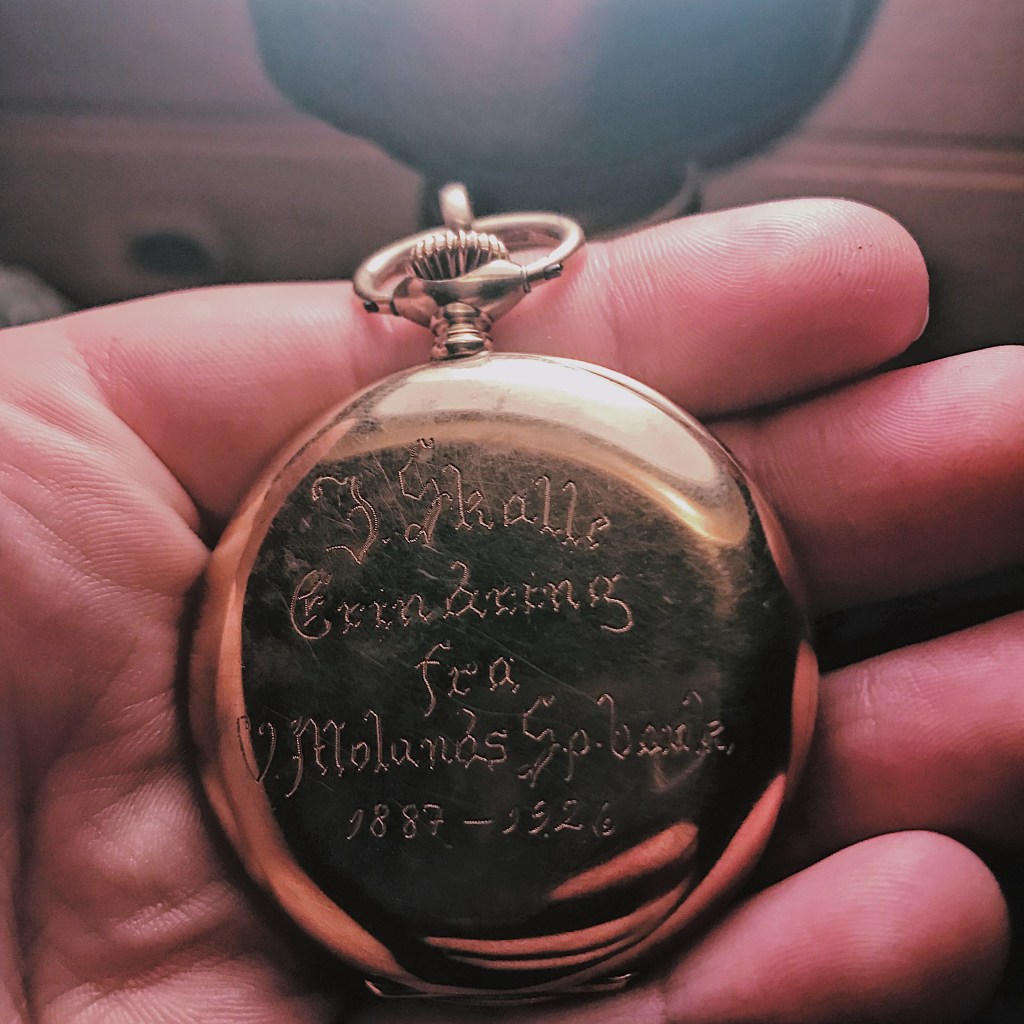
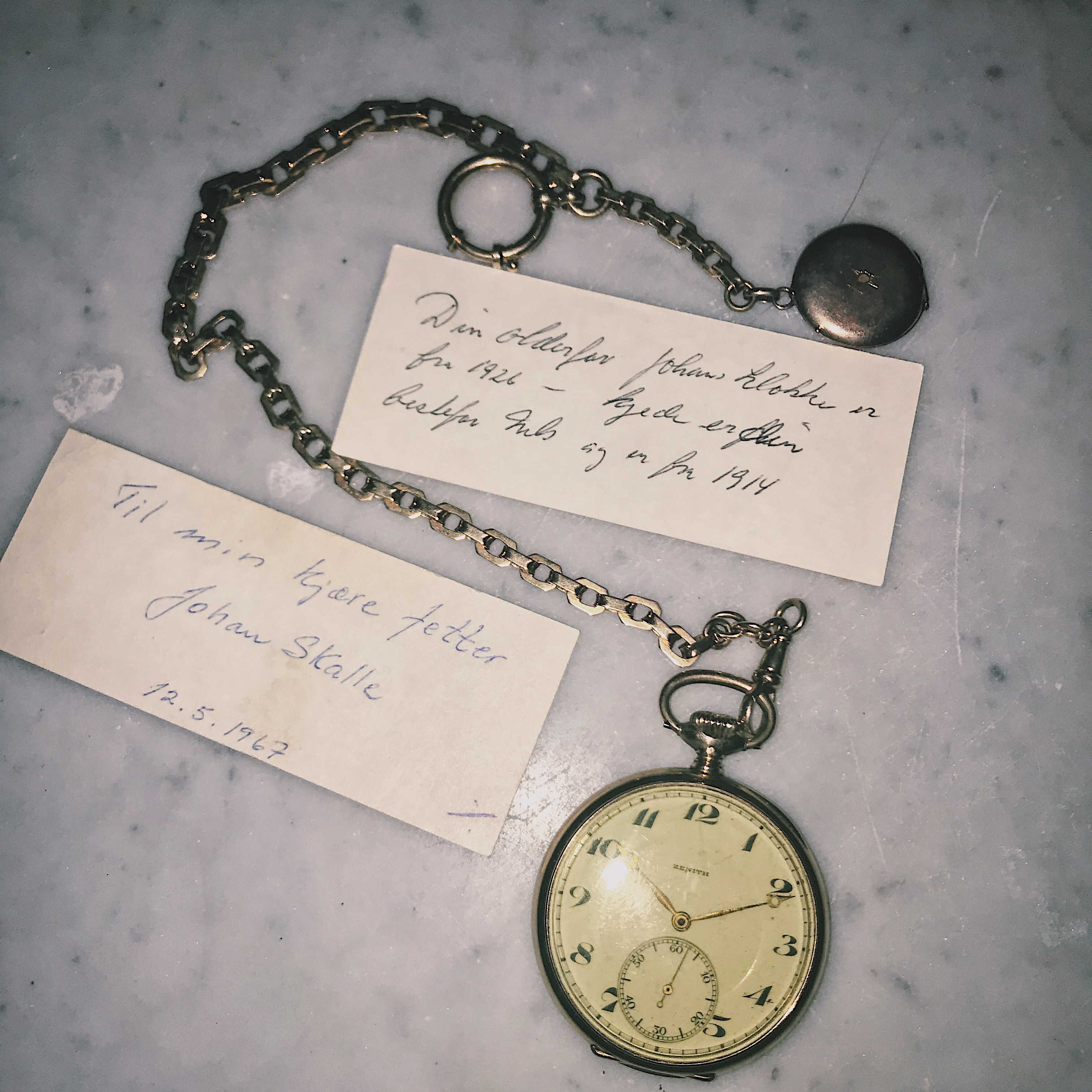
the pocket watch that awoke a lot of memories and feelings for my father

is oral history connected to a place or items ?

Brown, Stewart and Winslow further mention that: “(oral history) provide wider context about the places where your ancestors lived, the work they did, or local and national events during their lifetimes(…).” (Brown, Stweart, Windlow, 2012) My father lives on the ground where our family settled down for generations. The oral history has therefore been kept in the same area for centuries. It is clear that my father knows a lot from being told for example from his grandfather about his grandfather’s father.

Janis Wilton wrote in Imaging Family Memories that: “Also of relevance are discussions of the ways in which a photograph can trigger or even shape a memory shared through an oral history interview.” (Wilton, 2018). In the case of this site, one can look at photographs as a thing, just like a pocket watch or a document. It awoke memories, in my father’s case the watch awoke oral memories that have been passed down to him from his grandfather and father.

This provides the information that provides the understanding and evidence for the importance of oral history. Oral history provides a person, a family and at times a whole people with the history they have so longed for. In my father’s case, it gives him the knowledge of his family when there is a lack of written history, in his belief the oral history is just as reliable as written history. Oral memories serve in many cases as one of the only sources for information for families about their previous generations. This is the case for many Norwegian families and that is why this project emphasises the lack of written family history because there is a great lack of it if you do not count written sources.

_____________________________________________________________________________

bibliography:

Brown, C., Stewart, M. and Winslow, M. (2012). Family Historians | Oral History Society. [online] Ohs.org.uk. Available at: http://www.ohs.org.uk/information-for/family-historians/ [Accessed 8 Jan. 2019].

Lyman D. P. (n.d.). The Importance of Oral Histories – Using and conducting an oral history. [online] Genealogy.com. Available at: https://www.genealogy.com/articles/research/2_oralhs.html [Accessed 9 Jan. 2019].

Perks, R. (n.d.). What is oral history?. [online] Le.ac.uk. Available at: https://www.le.ac.uk/emoha/training/no1.pdf [Accessed 8 Jan. 2019].

Thompson, P. (2018). The Oral History Reader. 3rd Edition. Robert Perks and Alistair Thomson. The Voices Of The Past – Oral History, 45(1), p.34.

Wilton, J. (2018). The Oral History Reader. 3rd Edition. Robert Perks and Alistair Thomson. The Voices Of The Past – Oral History, 45(1), p.269.
The Interview

My father’s name is Guttorm and he lived on this farm from when he was born until his parents built a house right next to the farm, closer to the seaside. He has lived here his entire childhood, His grandparents lived here while him, his brother and parents lived in the house close by but spend a lot of time at the farm growing up. He remembers things from his childhood that connected him to this place, and he remembers his grandfather telling him stories about this family and the house.

He moved into the house in his teens, lived on the second floor while his grandmother lived on the first floor, she lived in the house until a few years before her death, he says that he believes that she loved this place and that is a good reason to make sure that we are still here. he moved out and decades went by and now he is the one living here making sure the farm is in good condition. He makes sure the family heritage is alive to this day and hopefully in generations to come.

Before reading the interview it’s important to understand what oral history is when many think about oral history they think about it as a story. In this incident like many other situations, my father has been told information from his father and grandfather. The question many people would ask is, is this information true and how can we trust oral history? East Midlands Oral History Archive´s article What is oral history mentions that: ” Oral history can be defined as the recording, preservation and interpretation of historical information, based on the personal experiences and opinion of the speaker.” The oral history is history based on the speaker’s personal opinion of the information the speaker has. further, the article mentions that: ” All historical sources have their problems, and oral history is not necessarily any more biased or partial than documentary evidence. 

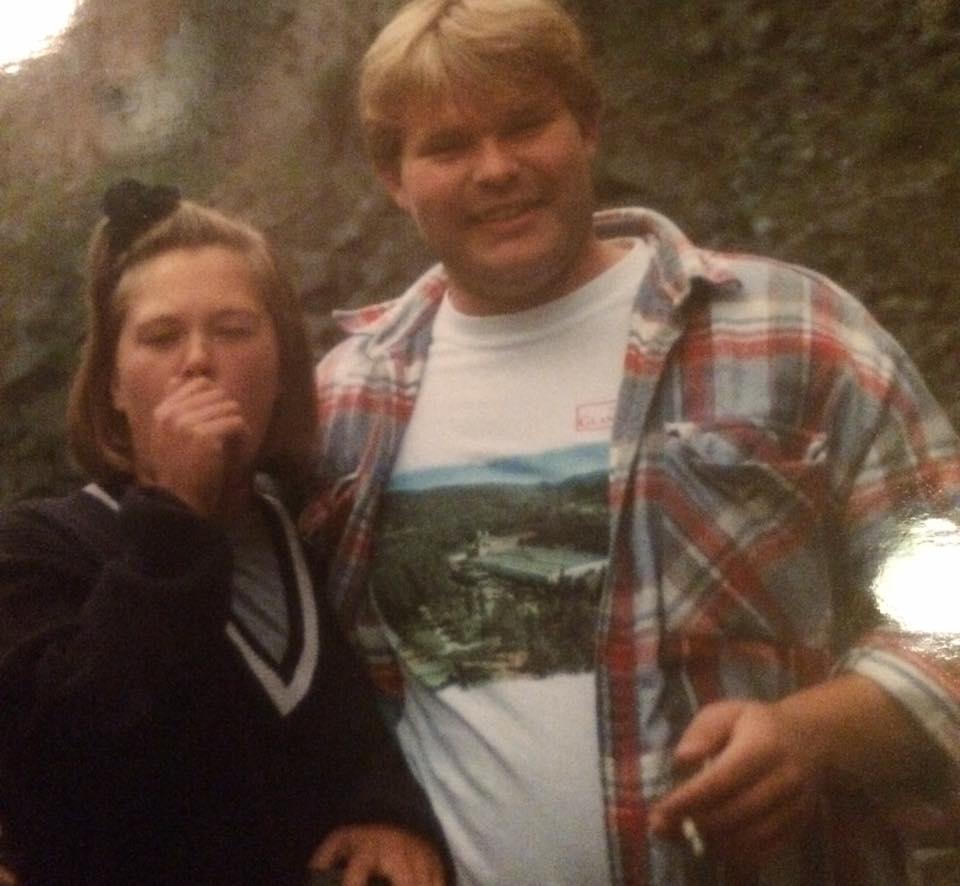
My mother and father at a young age, at the time he was living at the farm

The interview was done in Norwegian, I wanted to make sure he was as conftable as possible and doing the interview in his native language made it comfitable for him. under you will se a clip from the interview aproximatly 10 minutes long, I made sure to get the most important part of the interview and then transcribe it over to english. Under the sound clip, there is a transcript of parts of the interview.

A clip from the interview with my father, the books in the image were found in the farm house

the interview:

Margrethe: Okay so, why is this farm so important to you, and why did you decide to live here?

Guttorm:  The farm is important to me because it has been in the family for so long and when my brother died, we had an agreement that we would keep it in the family so it would stay in the family.

Margrethe: yeah, since you have said that it has been in the family for so long, is that then one of the reasons why you wanted to live here?

Guttorm: It is one of the reasons why I wanted to live here, but the most important things are to get it back to how it used to be here.

Margrethe: Yeas, because you have renovated parts of this farm, your brother renovated this farm first, but you were the one renovating the brewery houses and the fields and fences…

Guttorm:  Boathouse, the docs…

Margrethe: Is it because you want to keep it functional or is it because like you said to get it back to the way it used to be?

Guttorm: I want it to go back to the way it used to be, but also because I like it like that.

Margrethe: How do you know as much as you do about the family history?

Guttorm: I have been told things from my grandfather and my father

Margrethe:  Have you asked them about the history?

Guttorm:  well a little bit, sometimes. But during the years information has popped up and you get to know more things.

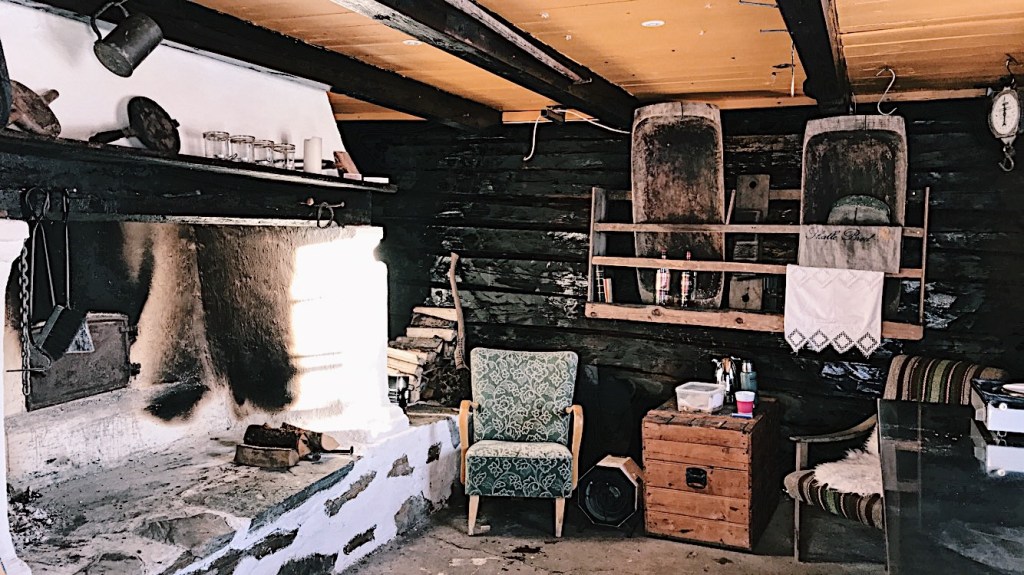
The interview took place here, in the brewery house

5 minutes and 43 seconds into the interview:

Margrethe: The name Johan is repeated throughout the family generations, is there a reason or meaning behind you calling you son Johan?

Guttorm: Well, it follows the family, yeah it follows the family so in a way its kind of natural to do it

Margrethe: With the name Johan and the generations and the house, another thing follows, you have mentioned a pocket watch?

Guttorm: That pocket watch is inherited, on the pocket watch it says Johan Skalle, so its natural that I called my son Johan and the clock is now with him

The Pocket watch mentioned in the interview

7 minutes and 45 seconds into the interview:

Margrethe: Are you happy with your decision to move out here and keep the family heritage going, even though it might be some consequences to it?

Guttorm: Yes I do, but it is tiring, the constant work to be able to afford the restoration and there is so much money going out all the time. And I am too old, I should have done this 25 years ago haha.

Margrethe: Do you hope that one of us children are gonna continue or keep the things you have done to this place in a good condition?

Guttorm: I hope one of you will, but I’m not putting that burden on anyone, they have to figure that out on their own

Margrethe: Do you hope that because of all of the work that has been put into it or because our family have been here for so long?

Guttorm: Its everything really, its fun if someone is interested in keeping the family on these grounds and keep all the work put into it in good condition

The Documents

Abraham Skalle is an important part of this project. researching him was fairly easier in comparison to the rest of the family, the reason why is because he was quite known in the Kingdom of Norway and the Kingdom of Denmark. The reason for why he was known is because he was a pirate. He owned a few ships through his career and they were all built in the town of Lillesand or the town of Kristiansand by friends or acquaintances of him.

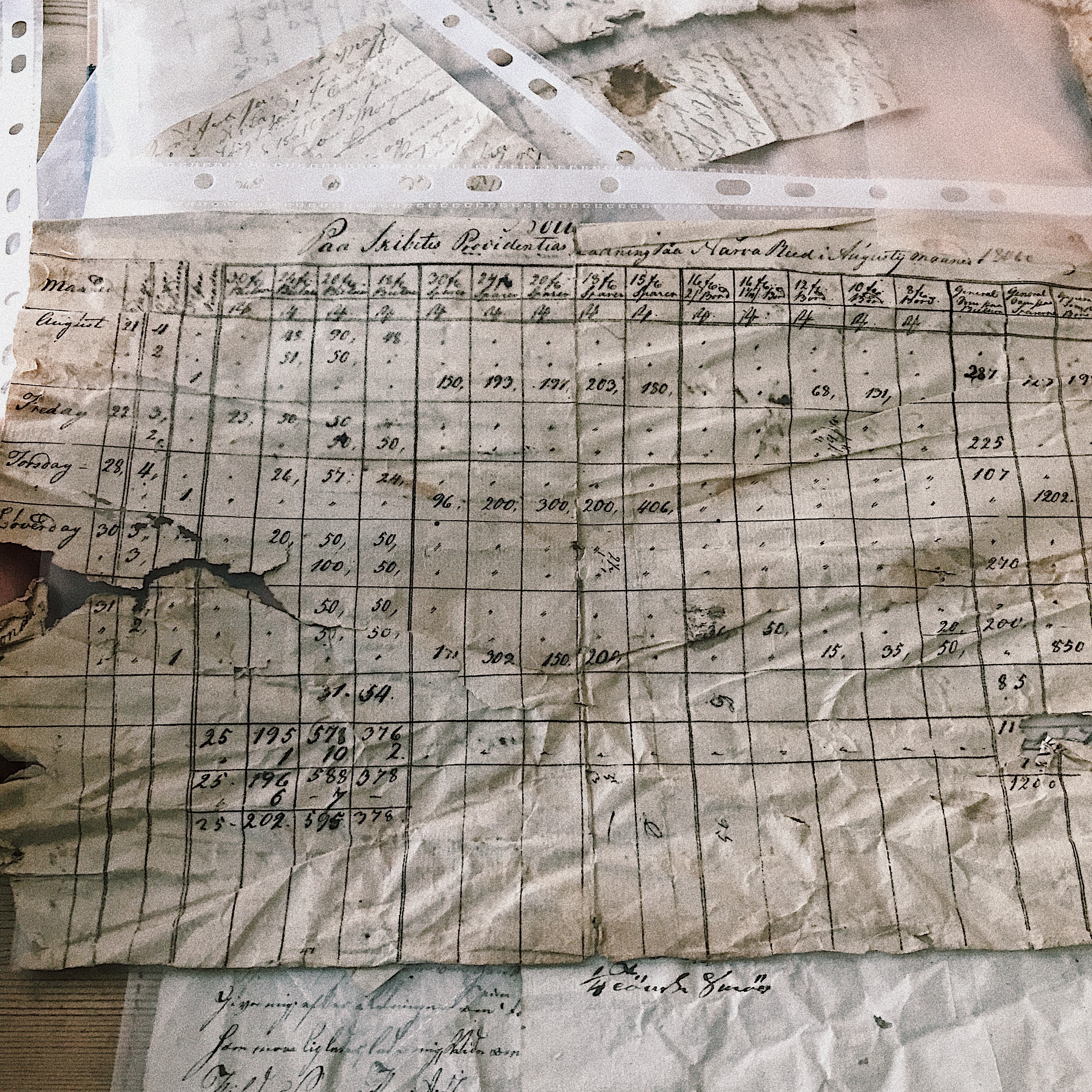
Abraham Skalle´s primary document of the finances of his ship

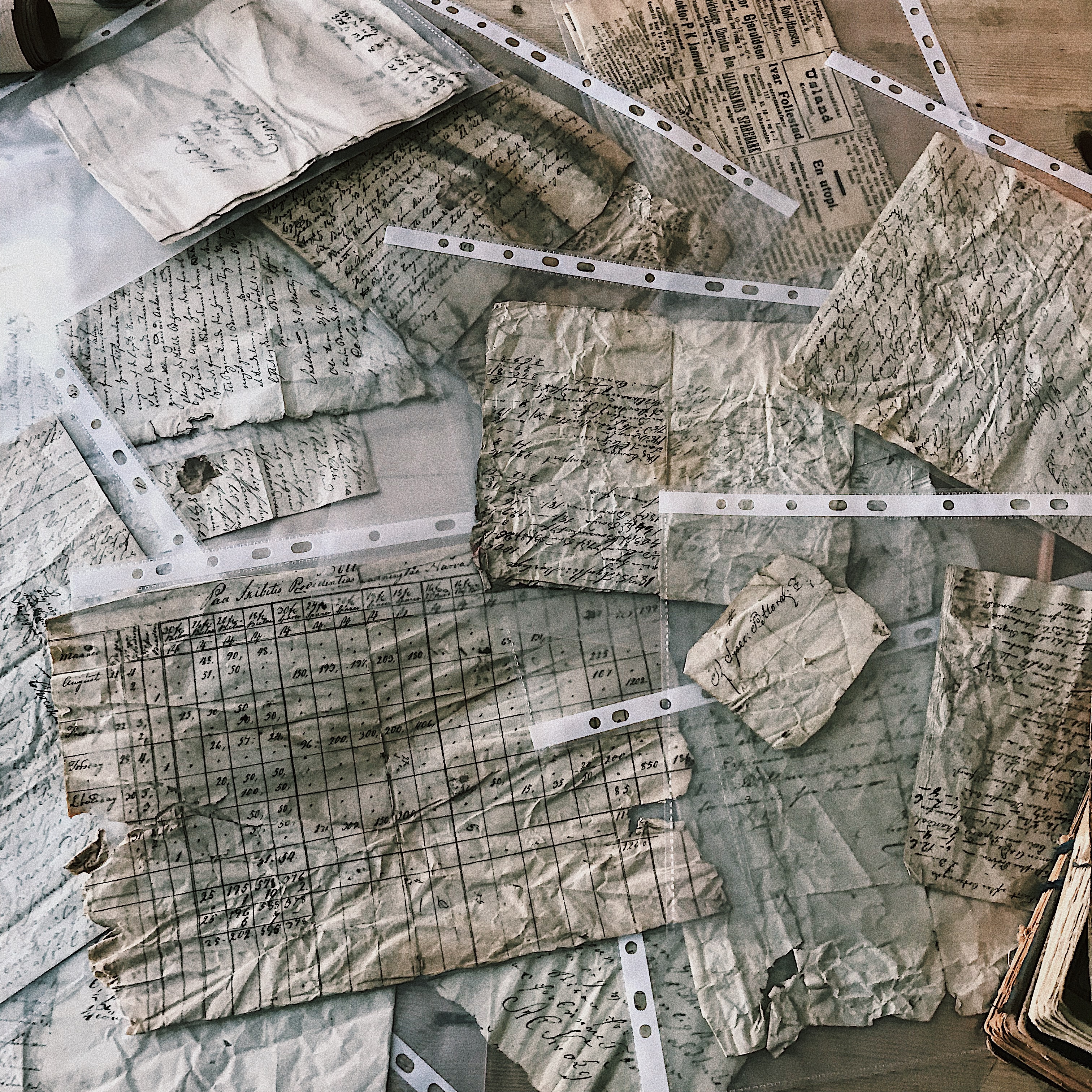
The documents in the wall contain letters from Abraham Skalle to family, friends and the Queen of England at the time due to his Piracy. They are sent from all over the world when he was out on missions, one of the most exciting ones are the letter from the Bahamas. But the documents are also business documents, and my father has spent a great deal of time analysing and looking at these documents. The one shown on the picture above is paperwork from one of his ships, it’s not known which ship but it was one of the ships he was the captain on. 

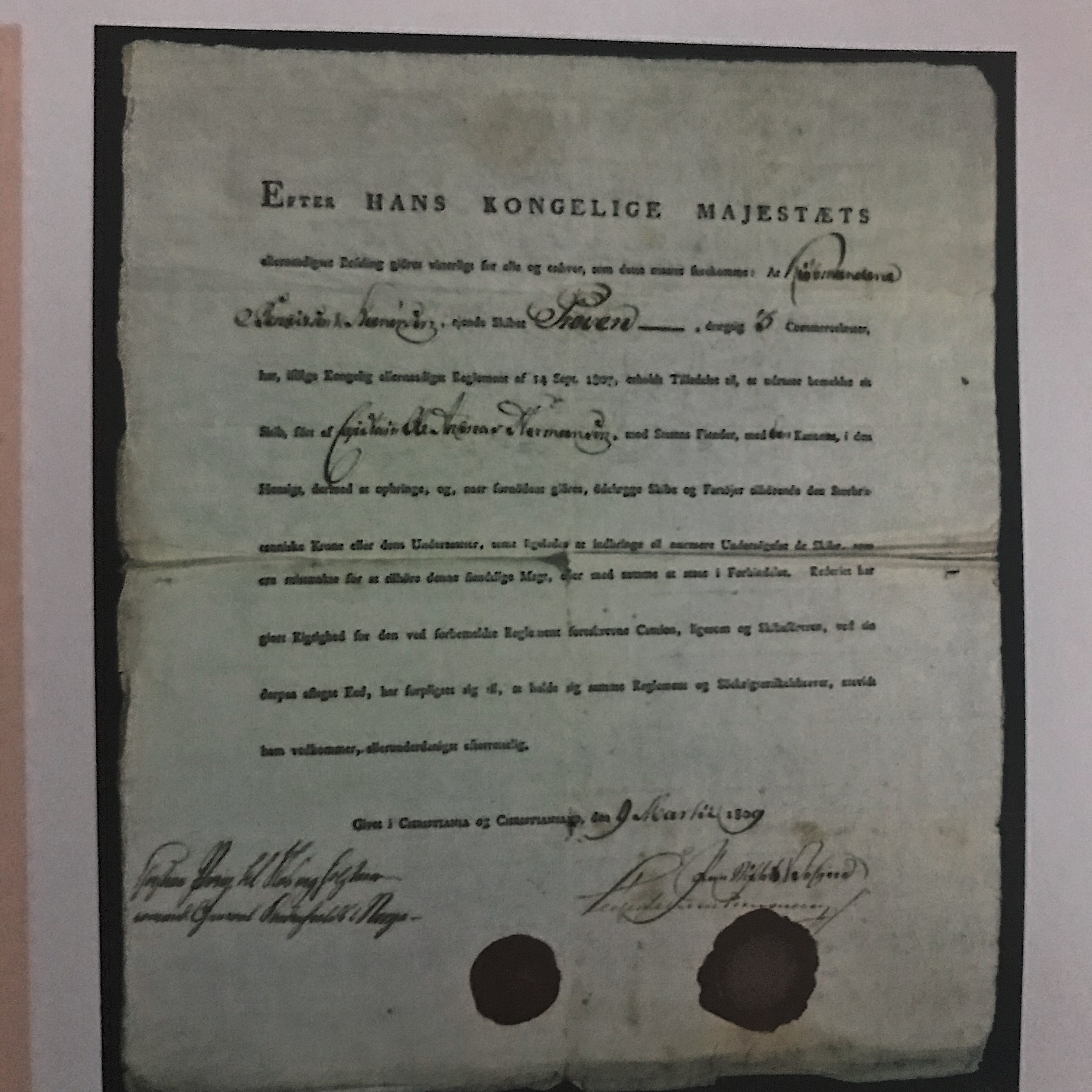
privateer letter sent to the royal majesty, this letter was found in the book about the history of Lillesand 1800-1850

Information known about him is that he was born in 1775 and he died in 1854. He married Margareth Skalle, born Smith from the Isle of Man (Born 1775, Dead 1812) and they had a daughter together Maren Elisabeth Abrahamsdatter Skalle. It is believed that he met Margareth (also called Mary) on one of his missions. She moved to Skalle farm after their marriage. It is believed from parts of her diary that she was deeply unhappy on the farm due to her husband being away for long periods of time. The generations after have been told that she might have died on the front steps pictured in the photograph shown in this post. he later remarried after her death in 1812 but they were buried in the same grave. after his voyage with the Kingdom of England, he started working for the King of Denmark and was later knighted.

A letter from Abraham Skalle dated 22. July 1834

The picture as previously mentioned is taken in the 50s but the document was written the 22. July 1834 and was sent to Skallegård from Abraham Skalle. They are hard to read due to the condition the paper is in, but also the state of the writing and of how old the letter is. They were found on the walls of the second floor. most likely where the house has been extended in late 1800, it is clear from some of the letters that Abraham was close to the Johan at the time and they exchanged letters from wherever he was in the world at the time. The letter from the Bahamas ended up in the wall due to its importance for Abraham Skalle´s legacy and his importance.

A few of the documents found in the walls of the house during the renovation of the old house.

These papers are important for this project because it sparked my fathers interest for the family history and due to these letters and documents he started asking questions and looking for answers. He id what I´m doing, researching on the internet first, but due to the lack of information online he went around asking instead. And now his love and care for his families birthplace lay deep in the work he does.

why were the documents places in the walls?

In many cases especially in Norway, old documents, newspapers, letter and items are found in the walls during restorations of old houses. It is more common that many people think. The Norwegian historian Frode Sprauten explains in a Norwegian newspaper article that in regard to this that in many cases things are placed in the wall as isolation and also during the second world war they were placed in walls and floor because they wanted to hide certain things from the Germans. Cases like the one experienced in our case are to keep things in the walls for later generations to find it because it might bare meaning for those who placed it there.

______________________________________________________________________________

Please note that some of these sources might only be accessed with a Norwegian IP address.

Information about Abraham Skalle: Knudsen, O., Larsen, P., Vennesland, E. and Larsson Fedde, H. (n.d.). Abraham T. Skalle – Sjøhistorie.no. Available at: https://www.sjohistorie.no/no/sjofolk/52047/ [Accessed 1 Jan. 2019].

information about hidden documents and things: Veka, C. (2015). Interessen for slektsforskning har eksplodert etter NRK-serie. [online] Dagbladet.no. Available at: https://www.dagbladet.no/kultur/interessen-for-slektsforskning-har-eksplodert-etter-nrk-serie/60805254 [Accessed 1 Jan. 2019].

book where the privateer letter was posted: Eide Johnsen, B. (2017). Lillesands historie 1800-1850. 1st ed. Oslo: Cappelen Damm As, p.83.

The Family Before Us

Places trigger memories for insiders, who have shared a common past, and at the same time places often can represent shared pasts to outsiders who might be interested in knowing about them in the present

Winter and Sivan, 2000

In this post I am mainly going to focus on the history of previous generations, the reason for this is that my father´s main focus is from my father grandparents and generation before them. The last generation did not have farm animals on the farm nor was it a working farm. it is also important to mention that since then we are establishing my father’s memories and feelings, this ultimately is my fathers side of the family. The quote above represents a big part of this site, my father shared memories and history connect him to those before him due to the place he lives and grew up.

My father’s grandparents: 

 As mentioned in the previous post, I talk about the production on the farm. My father’s grandparents were the last generation before my father’s generation who produced food and kept animals on the farms. My father remembers my grandparents while they lived in the house, he remembers specific details (that are included in the interview) This was before the renovation took place in the house and this is important because my grandparents kept all the old furniture in the house and they kept the old silhouette which later when the house was renovated made my father think of the importance of the history of where he came from.

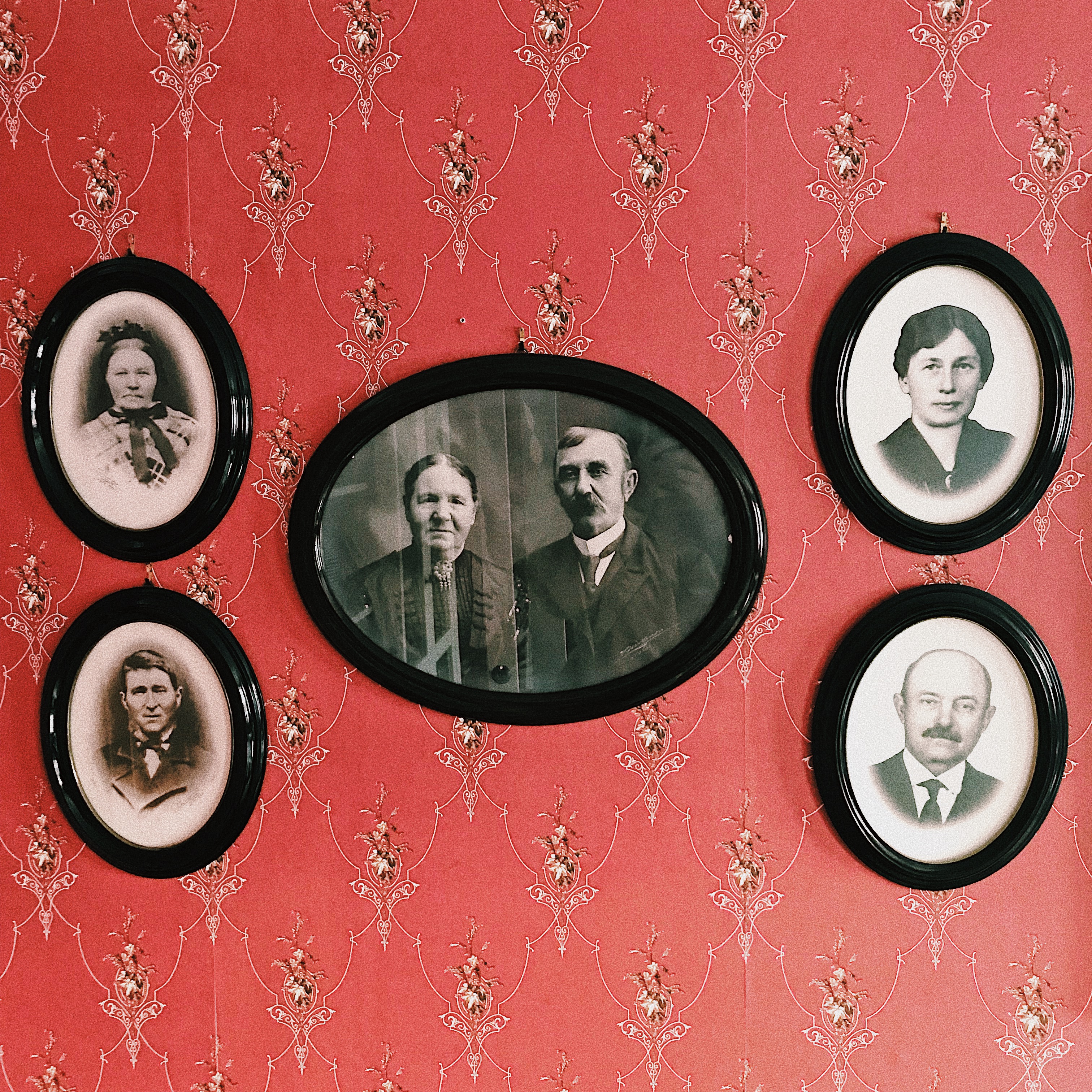
on the right: Nils Johansen Skalle, Ingeborg Skalle (Great-great-great grandparents)
in the middle: Johan Severin Nilsen Skalle, Odine Skalle (great-great-grandparents)
on the left: Nils Johansen Skalle, Karoline Skalle (great-grandparents)

The generations before:

The three generations pictured above are the generations we know the most about. The Norwegian National nor the local archives does not contain a lot of information about them. Abraham Skalle which I am gonna discuss further in another blog post is attached to a lot more documentation due to his importance in the shipping industry.

Let go back to the people pictured above, even though it is a lack of written documentation, most of it is shared orally. My father was told a lot of information from his parents about our family history. Nils Johansen Skalle and Ingeborg Skalle (pictured on the right) were the generations who did the large extension on the house, they lived in the tiny brewery house during the summer while they rented out the house to people who were willing to pay a good price for it. My Father speculates that Nils might have been the one hiding the letters in the wall because some of the documents from Abraham Skalle was dated to Skalle farm in 1834, due to Abraham Skalle earning a fair share of money, it is known that he moved out of the Farmhouse after his wife’s death and so Johan Severin Nilsen Skalle and Odine Sofie Skalle moved into the farm.

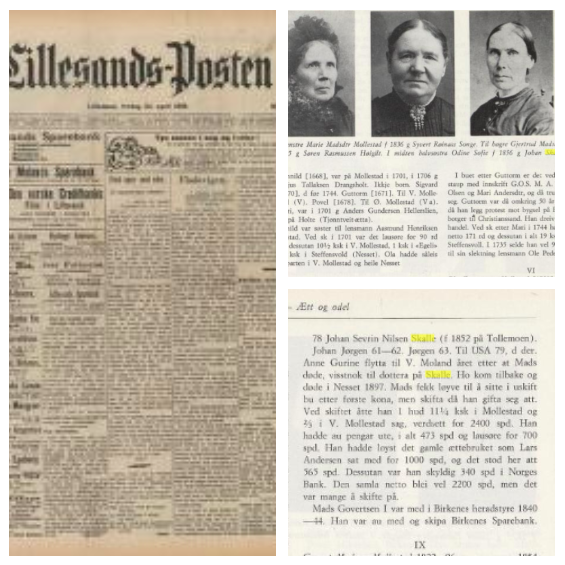
Johan Severin Nilsen Skalle and Odine Skalle (pictured in the middle) is mentioned in the local newspaper in 26.04.1938 due to them having their Diamond Wedding anniversary where its mentioned that his wife (Odine) is from the neighbouring town of Birkeland.

On the right: Newspaper clip out from 26.04.1938 where the Dimond Wedding was announced
On the left: top image is a picture of Odine Sofie(pictured in the middle) and her two sisters (page 91) and the bottom is an article of Johan Severin Nilsen Skalle´s birth year 1852 and announcement of his voyage to The United States (page 92)

Why is there no more written history?T

When I researched my Family name on The Norwegian Genealogical Society I found nothing and I did not expect to find anything as well. Norway as one independent Kingdom did not exist until 1814. Norway is a young independent country and due to that, we have been influenced by both Danish and Swedish for centuries. We were in the Danish-Norwegian Union from 1537-1814 and the upper-class Norwegian spoke Danish and that is one of the reasons why we have two “languages” in the Norwegian language. The poor and the people who lived on the farms around the Norwegian countryside spoke in dialects and could not write. We have church book documentation and city documents for births and farm owners but no independent archive of the Norwegian families. The identity confusion and the lack of writing skills of family members might be a reason why there is not much family history written, but like Folklore, its shared from generation to generation. Even though its known that the last 4 generations in my father´s family could write, there was no culture in Norway of documenting family history

______________________________________________________________________________

Please note that some of these sources might only be accessed with a Norwegian IP address

newspaper: Lillesandposten (1938). Lillesandposten. [online] p.2. Available at: http://urn.nb.no/URN:NBN:no-nb_digavis_lillesandsposten_null_null_19380426_68_32_1 [Accessed 1 Jan. 2019].

book with pictures: Tveite, J. and Dolven, K. (1969). Birkenes 2: Ætt og odel. Høgfeldt A.S: Kristiansand S, pp.91, 92

info on Danish-Norwegian union: Weidling, T. and Njåstad, M. (2018). Norge under dansk styre – 1537-1814. In: Store Norske Leksikon. [online] Store Norske Leksikon. Available at: https://snl.no/Norge_under_dansk_styre_-_1537-1814 [Accessed 1 Jan. 2019].

Winter, J. and Sivan, E. (2000). War and Remembrance in the Twentieth Century. 1st ed. Cambridge University Press, p.144.

Historical Background

For as long as I have lived I knew where I belonged. I am lucky to say that, after all, the family name is the same name as the Name of the Area. I have been told many stories as I grew up, but one thing that always bothered me was the fact that the more research I did, the more questions I was left with.

I always used to go to my dad when I had questions about my families past, questions like why have my family stayed here for such a long time? how long have they been here? why did the production on the farm stop? and where is all the information about the family? My father always had an answer to all of my questions, he is proud of the family history and most importantly the farm.

A few years ago, my family and I moved into the farm. It came to my attention that there was a lot of old documents found in the walls of the house when the renovation of the old farmhouse was undergoing. and my father’s interest was sparked again. it became clear to me how much the past means to him, I, therefore, decided to interview him about this.

Processed with VSCO with c1 preset

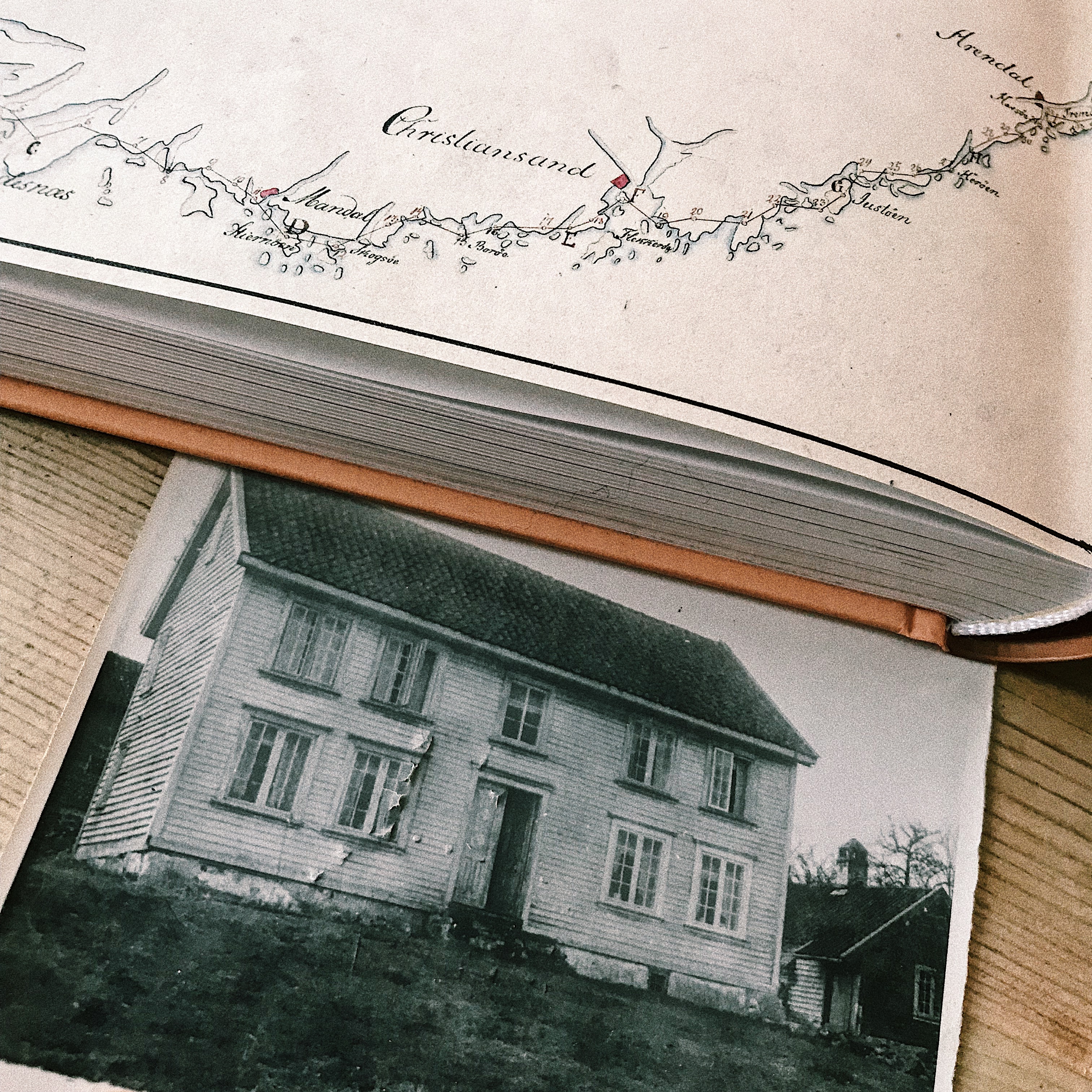
This Photograph was taken in the 1950s when the farm was in the possession of my father grandparents

The family farm is registered as a farm and it includes a decent amount of fields and woodlands. Previously during my father’s grandparents and generations before that the farm was still a working farm. animals like sheep and chickens were living on the farm. when my parent’s father lived on the farm the production stopped, but when my father got the farm the production started again, and the sheep and chicken are now living on the farm again, the fields are used for crop again and the woodlands are used to produce materials like they used to. 

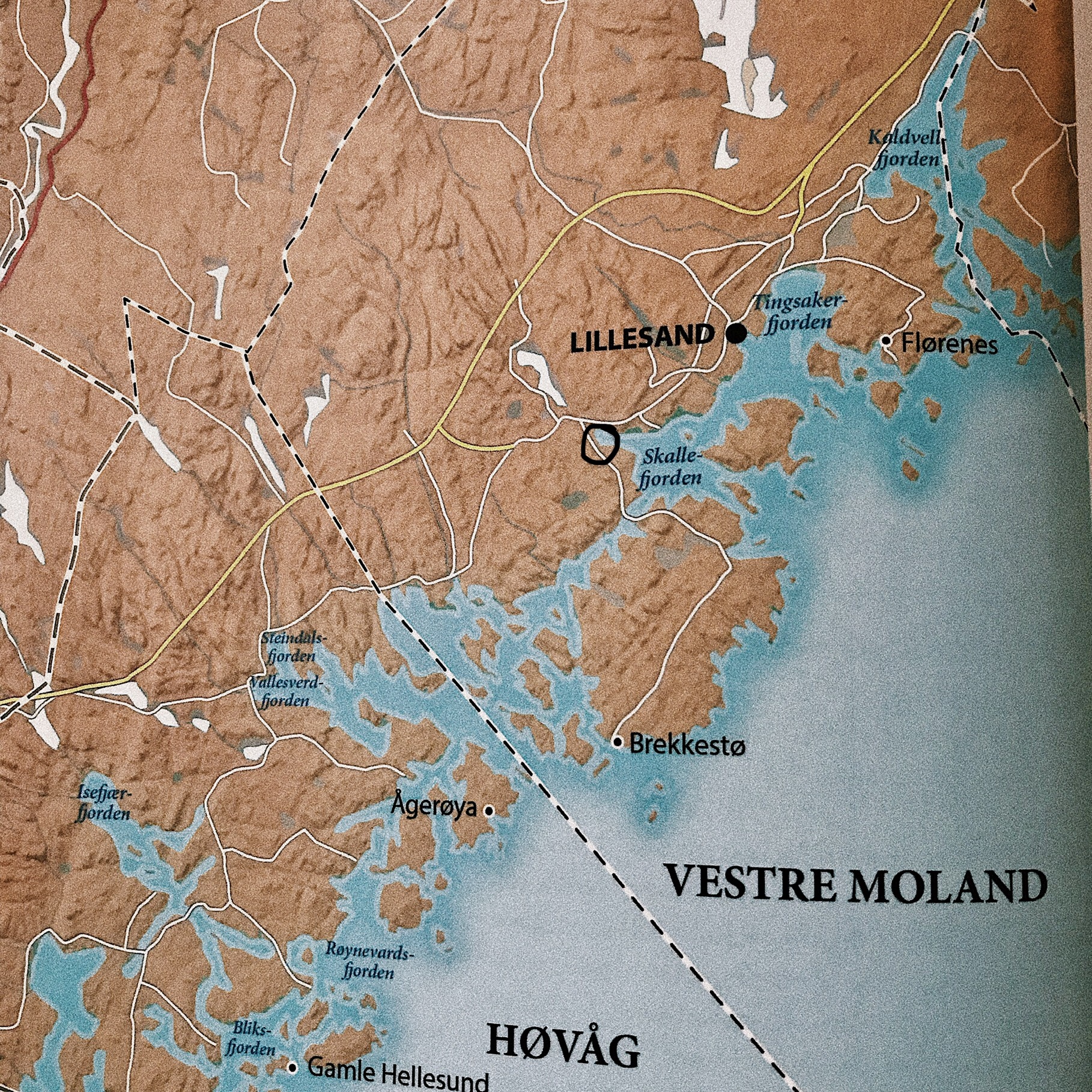
A map of the coast line of Lillesand Town, the black circle marks the placement of Skalle farm in the fjord called Skalle-fjord (source listed below)

The farm is placed on the southern coast-line of Norway, it is placed in a fjord. The Family started early as shipowners and ship sailors due to the coastline in the county. It is clear that this is one of the reasons why they decided to settle down on the coast due to it being so close to the shore line and them being close to the ships.

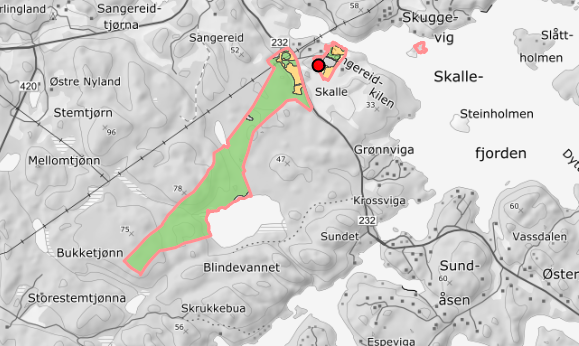
A map containing the farmland and woodlands belonging to the farm. 350 archers with woodland and 25 archers with farmland. If you look in the fjord you can see that the farm also own a part of the island called Torske-Holmen or Cod-island

The Woodlands and farmland have been used since the farm was registered as a working farm. As shown on the map, the farm contains a lot more woodland than farmland and due to that timber was sold and used for house building. hunting was a great resource for food and since the far contained everything from the open woodland area and thick wood there was a lot of different animals around to feed the family. due to the coastline, fishing could also be used for fishing in both seawater and lake water, on the map one can see a lake boarding to the woodland that belongs to the farm, freshwater fish could be found there as well.

It is important to note that Norway was a poor country until they found oil in the mid-1900, the oil made the country rich but before that, The people needed to rely on nature to survive, from farming to hunting and fishing. having land, woods and access to the sea was crucial for survival. that might be a reason for why the farm was able to be in the family for as long as it has been.

______________________________________________________________________________

Please note that some of these sources might only be accessed with a Norwegian IP address 

History from the city of Lillesand and map: Eide Johnsen, B. (2017). Lillesands historie 1800-1850. 1st ed. Oslo: Cappelen Damm As, p.83.

Map of the farmland is accessed on gårdskart.no. (link under picture)